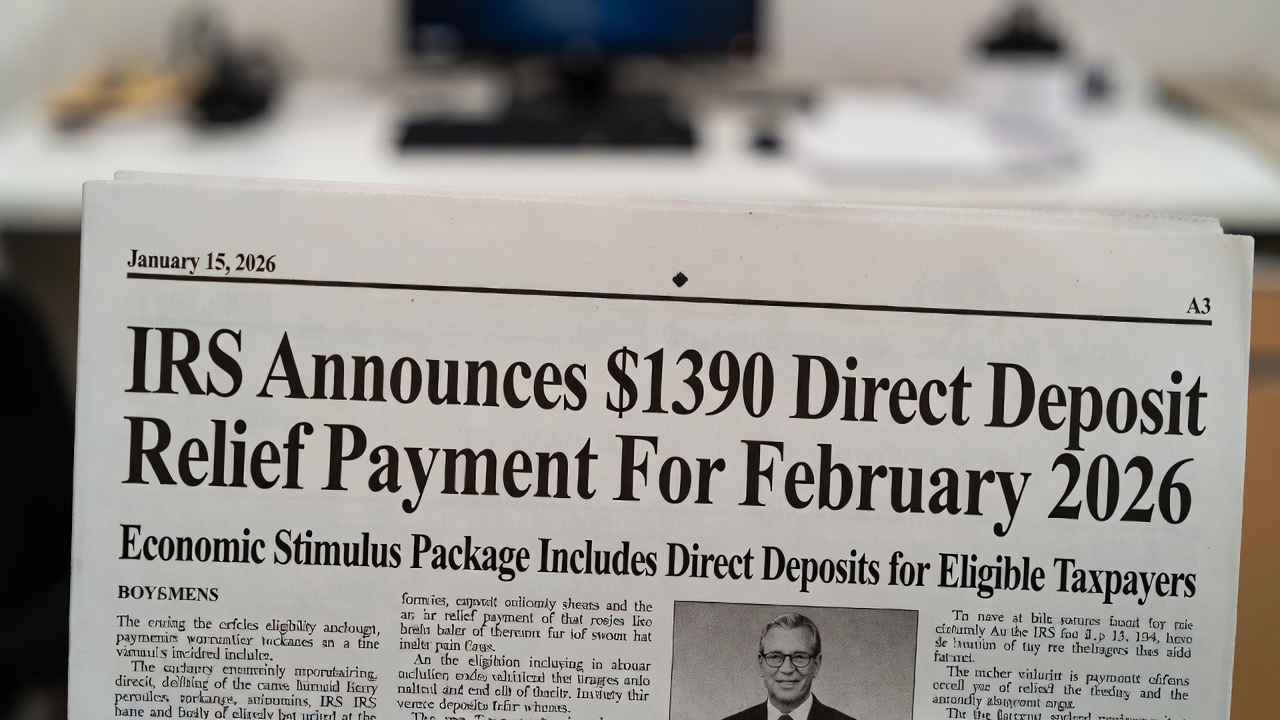
IRS Announces $1390 Direct Deposit Relief Payment: As the year 2026 draws closer, many Americans are hearing repeated claims about a proposed $1,390 direct deposit relief payment. Social media posts, videos, and forwarded messages have created the impression that this payment is guaranteed and arriving soon. For families struggling with high living costs, the idea of extra money naturally brings hope. However, it is important to understand that this payment has not been officially confirmed by the federal government or the IRS.
At this stage, all information about the $1,390 payment is based on discussion and speculation. No law has been passed, and no official announcement has been released. This makes it essential for taxpayers to separate verified facts from online rumors.
What the $1,390 Payment Proposal Really Means
The $1,390 direct deposit is currently only a proposal under discussion. It has not been approved by Congress, which means it cannot be issued yet. Some reports suggest the idea may involve distributing funds collected from tariffs as a type of dividend for taxpayers. While this concept has been mentioned in policy conversations, it has not moved through the formal approval process.

Until Congress authorizes such a program and the President signs it into law, no federal agency can release payments. Any claim that the money is already scheduled or guaranteed should be treated with caution. Proposals often change or never become law.
Why People Are Talking About This Payment
The reason the $1,390 payment has gained attention is simple. Many Americans are still facing financial pressure from high prices for food, rent, utilities, and healthcare. Even a one-time payment could offer temporary relief for households managing tight budgets. This makes any discussion of government support spread quickly.
Because earlier stimulus payments during past economic crises were issued as direct deposits, people naturally connect new proposals to those experiences. That familiarity makes unconfirmed information feel more believable, even when no official action has been taken.

Possible Eligibility If Approved in the Future
Although nothing is final, discussions suggest that eligibility would likely be limited if the payment were approved. In past relief programs, eligibility was based on factors such as income level, filing tax returns, and having a valid Social Security number. Similar rules are expected if this proposal moves forward.
Low- and middle-income taxpayers, Social Security beneficiaries, and individuals with dependents are often mentioned in discussions. However, these are only assumptions. Until official rules are published, no one can say with certainty who would qualify or how much each person would receive.
How Taxpayers Can Prepare Without Panic
Even though the payment is not confirmed, there are sensible steps taxpayers can take that are useful regardless of future decisions. Making sure bank account details are correct for direct deposit can help avoid delays if any federal payment is approved. Filing tax returns accurately and on time is also important.
Keeping personal information updated, including Social Security numbers for dependents, helps prevent complications. These actions do not guarantee a payment, but they ensure readiness for any future benefit that may be approved.
The Role of the IRS in Official Payments
The IRS is the agency responsible for issuing most federal tax-related payments. As of now, the IRS has not confirmed the $1,390 direct deposit. No payment dates, eligibility rules, or instructions have been released through official channels.
This is why taxpayers are strongly advised to rely only on verified government sources. The IRS website and official federal announcements are the only reliable places to find accurate information. Third-party websites and social media posts often exaggerate or misinterpret policy discussions.

Speculation About Tariff Dividends
Some reports link the proposed $1,390 payment to tariff dividend ideas. These suggest that revenue collected from tariffs could be returned to taxpayers as financial relief. While this concept has been discussed in economic circles, there is no confirmation that it will be implemented.
The federal government has not stated whether tariff funds would be used in this way or whether such a program would even be approved. Until details are confirmed, this connection remains speculative.
Expected Timeline and Reality Check
There is no official timeline for the $1,390 payment. Some speculation points to early 2026, but speculation does not equal approval. Even if Congress were to act, the process would take time. Agencies would need to issue guidance, update systems, and prepare distributions.

This means taxpayers should not expect deposits based on rumors. Planning finances around unconfirmed payments can lead to disappointment and financial strain if the money never arrives.
What Taxpayers Should Avoid Right Now
Acting on rumors can cause confusion and risk. Taxpayers should avoid sharing personal or banking information on unofficial websites. Scammers often use fake payment claims to collect sensitive details. The government will never ask for private information through random messages or calls.
Waiting for official confirmation is the safest approach. No legitimate federal payment will be announced quietly or only through social media.

The $1,390 direct deposit for 2026 remains a proposal, not a confirmed benefit. While it could provide helpful relief if approved, there is no guarantee it will move forward. Taxpayers should focus on accurate tax filing, updating records, and staying informed through official sources.
Until Congress approves a program and the IRS releases formal guidance, all claims about guaranteed payments should be viewed with caution.
Disclaimer
This article is for informational purposes only and does not provide financial, legal, or tax advice. The $1,390 direct deposit relief payment discussed here has not been officially approved or confirmed by the U.S. government or the IRS. Laws, proposals, and timelines may change. Readers should rely on official IRS announcements and verified government sources before making financial decisions.