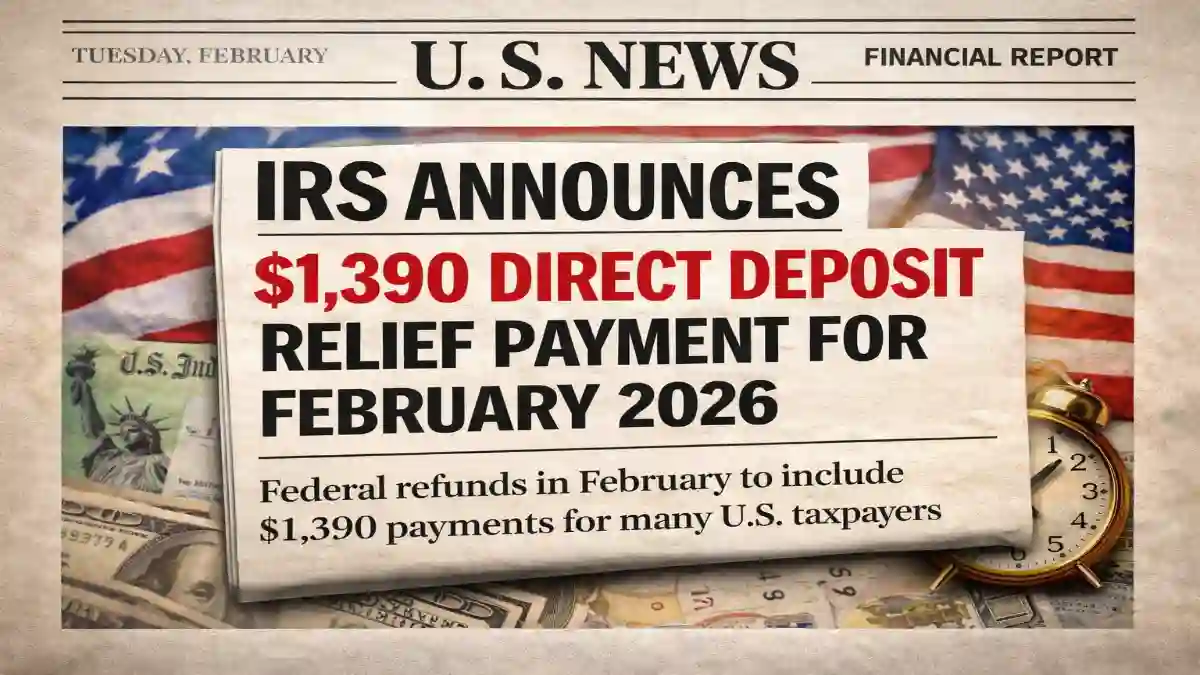
$1390 Direct Deposit Relief Payment For February 2026: As 2026 draws closer, a new number has started circulating across social media and online discussions in the United States. This time, it is a proposed $1,390 IRS direct deposit that many believe could arrive as early as February. For families struggling with high rent, food costs, and slow wage growth, the idea has sparked hope. At the same time, it has also created confusion about what is real and what is not.
Despite confident claims online, there has been no official announcement or approval of a $1,390 payment. What exists right now is discussion, speculation, and interpretation rather than a confirmed government program. Understanding the background of this rumor is important before making any financial plans.
Where the $1,390 Payment Discussion Started
The idea of a $1,390 direct deposit did not come from a single government statement. Instead, it appears to have grown out of broader policy conversations about using excess tariff revenue or federal collections to provide limited taxpayer relief. Similar ideas have surfaced in the past under different names, often described as dividend-style payments.

Economists note that these conversations usually return when inflation remains uncomfortable and public pressure increases. During election cycles, such ideas often gain attention, even if they never become law. Online, speculative figures can quickly turn into “confirmed payments,” even when no bill exists.
Why February 2026 Feels Believable to Many People
February is a sensitive month for U.S. taxpayers. It is the time when tax refunds begin arriving for early filers, and many people are already watching their bank accounts closely. Because of this, any rumor of an extra IRS deposit feels more believable during this period.
Memories of pandemic-era stimulus checks also play a role. When people see a number attached to a payment, it triggers expectations shaped by past experiences. However, experts stress that any new federal payment would require months of preparation and cannot appear suddenly.

No Official Approval Has Been Given
At this stage, no federal department has confirmed a $1,390 relief payment. The Treasury Department, the Internal Revenue Service, and other agencies have made no public statements approving or scheduling such a deposit. Without congressional authorization, agencies do not have the power to release funds.
Policy analysts emphasize that every federal payment must follow a clear legal process. This includes legislation, budget approval, and instructions for implementation. Until those steps occur, any payment timeline remains speculative.
Who Might Be Included if a Program Is Approved
If a relief payment were ever approved, eligibility would likely be limited. Past programs suggest that low- and middle-income taxpayers, Social Security recipients, and families with dependents are often prioritized. Income levels, filing status, and valid Social Security numbers would likely determine who qualifies.
Also Read:
 IRS Tax Refund Deposit Schedule 2026: Check Amount & Estimated Dates for Refund Payments in the USA
However, none of these rules are confirmed for the $1,390 payment because no program currently exists. Financial advisors warn against assuming eligibility based on earlier stimulus checks, as each proposal is shaped by different political and economic conditions.
Lessons From Past IRS Relief Programs
The United States has experienced several rounds of direct payments over the last decade, especially during the COVID-19 pandemic. Those payments were issued during an emergency and supported by bipartisan legislation. Today’s economic environment is different, even though financial stress remains for many households.
Past experience also shows that misinformation spreads fastest before official announcements. Fake IRS websites, emails, and messages often appear during periods of uncertainty. This history explains why the IRS repeatedly urges taxpayers to rely only on official sources.

How Economists View the Impact of a $1,390 Payment
If a $1,390 payment were approved, economists believe its impact would be limited but helpful. For lower-income households, it could cover essential expenses such as groceries, utilities, or short-term debt. For the broader economy, it might provide a brief spending boost.
Experts agree that one-time payments do not fix long-term issues like housing affordability or healthcare costs. Instead, they serve as temporary relief and a political signal that concerns are being heard.
Social Media’s Role in Spreading Confusion
Social media has played a major role in amplifying the $1,390 payment narrative. Short videos and posts often present speculation as breaking news, making it difficult for readers to separate fact from rumor. For people under financial strain, these messages can feel reassuring.
Consumer advocates urge caution. Preparing tax records and keeping bank information updated is sensible, but expecting a February payment without confirmation can lead to disappointment. Verified information should always come first.
What Would Need to Happen Next
For the $1,390 IRS payment to become real, it would need to appear in a formal legislative proposal. Congress would have to debate and approve funding, and agencies would need clear instructions on delivery. This process takes time and cannot be rushed.
Until those steps occur, analysts expect continued discussion rather than action. Any confirmed program would be announced publicly and clearly, leaving little room for confusion.
Staying Informed Without Falling for Scams
The safest way to stay informed is by following official government announcements and trusted news sources. Any real IRS payment would be communicated through official channels, not private messages or social media comments.
Sharing personal or banking details in response to unverified claims can be dangerous. Patience and caution remain the best strategies when rumors spread faster than reality.
Disclaimer
This article is for informational purposes only and does not provide financial, legal, or tax advice. The $1,390 IRS direct deposit payment for February 2026 has not been officially approved or announced by the U.S. government or the Internal Revenue Service. All details discussed are based on public policy conversations and unconfirmed proposals. Readers should rely solely on official government sources for accurate and up-to-date information before expecting any payment.