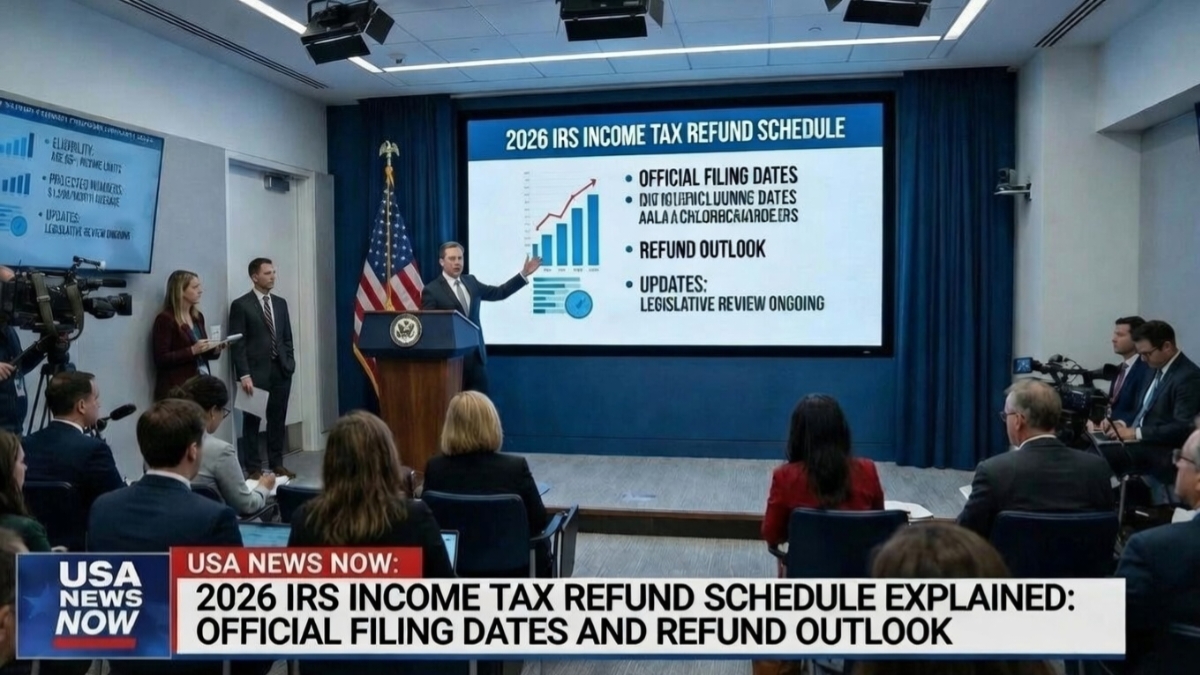
As the 2026 tax season begins, millions of Americans will start filing their 2025 federal income tax returns. For many households, an IRS tax refund is not extra money but an essential part of managing early-year expenses. Rent payments, school fees, insurance costs, and overdue bills are often paid using this refund, making timing and clarity extremely important.
Understanding how the 2026 refund process works can help taxpayers plan better and avoid unnecessary anxiety. While refund amounts and dates are different for everyone, knowing what to expect from the IRS can make the experience smoother and less stressful.
When the IRS Will Begin Accepting Tax Returns
The Internal Revenue Service is expected to start accepting 2025 tax returns in the last week of January 2026, following the pattern of previous years. Many tax software platforms allow early preparation, but returns are not officially processed until the IRS system opens.

The standard deadline to file is April 15, 2026. Taxpayers may request an extension, but it is important to understand that an extension to file does not mean an extension to receive a refund. Filing later in the season can sometimes result in slower processing due to increased workload at the IRS.
Why Refund Dates Are Not Fixed
Unlike benefit programs with scheduled payment dates, IRS tax refunds do not follow a fixed calendar. The IRS does not publish exact refund dates because each tax return is reviewed individually. Processing time depends on how the return is filed, how accurate it is, and whether additional checks are required.
Returns filed electronically and sent with direct deposit are generally processed the fastest. In many cases, refunds are issued within about 21 days. However, paper returns, mailed checks, or returns with errors can take several weeks or even longer to process.

Factors That Can Delay Your Refund
Several factors can slow down a tax refund, even if the return is filed early. Errors such as incorrect Social Security numbers, mismatched income information, or missing forms often trigger delays. When this happens, the IRS may need to manually review the return, which adds processing time.
Refunds that include certain tax credits can also take longer. These delays are not penalties but required verification steps designed to prevent fraud and protect taxpayers. Accuracy is far more important than speed when it comes to filing taxes.
Why Some Tax Credits Affect Refund Timing
Taxpayers who claim refundable credits such as the Earned Income Tax Credit or the Additional Child Tax Credit usually experience later refund dates. Federal law requires the IRS to hold these refunds for additional review, even if the return is otherwise complete.
Also Read:
 Social Security Shock for February 18, 2026 Many Expect a Payment, But Only Some Will Get It
This means that even early filers who qualify for these credits may not receive refunds until later in February or beyond. While this can be frustrating, these rules exist to reduce identity theft and improper payments.
How to Check Your IRS Refund Status
The most reliable way to track your refund is through the official IRS “Where’s My Refund?” tool. This system updates once per day, so checking multiple times will not speed things up. Refunds typically move through three stages: received, approved, and sent.
Once the refund status shows “Sent,” it may still take one or two business days for the money to appear in your bank account. This short delay is normal and usually depends on your bank’s processing time.

Does Filing Early Help in 2026?
Filing early does offer some advantages. Early in the tax season, IRS systems are less crowded, which can help speed up processing. Filing early also lowers the risk of tax-related identity theft, where someone files a fake return using your information.
However, early filing does not override accuracy checks. If a return contains errors or incomplete data, delays can still occur. The IRS focuses on correctness first, not how early a return is submitted.
What the 2026 Refund Season Looks Like
For 2026, the IRS is expected to continue improving its systems while maintaining strong fraud prevention measures. While processing has become more stable compared to earlier years, staffing challenges and security checks can still affect timelines.

Taxpayers should expect refund dates to remain estimates rather than guarantees. Even with improved tools and online access, individual circumstances will always influence how fast a refund is processed.
How to Avoid Problems and Get Your Refund Smoothly
To reduce delays, taxpayers should choose electronic filing and direct deposit whenever possible. Double-checking personal details such as names, Social Security numbers, and bank information can prevent simple errors that cause long delays.
It is also important to rely only on official IRS tools for updates. Fake websites and scam messages often appear during tax season, promising faster refunds or special payments. Staying cautious helps protect both your refund and your personal information.

IRS tax refunds remain an important financial lifeline for many Americans. While exact refund dates cannot be guaranteed, understanding how the process works can help reduce stress and confusion. Preparation, accuracy, and patience are the keys to a smoother refund experience.
By filing correctly, staying informed, and using official IRS resources, taxpayers can navigate the 2026 tax season with greater confidence and fewer surprises.
Disclaimer
This article is for informational purposes only and does not provide tax, legal, or financial advice. IRS tax refund amounts and timelines vary based on individual circumstances, filing methods, and administrative conditions. Refund dates discussed are estimates, not guarantees. Readers should consult the official IRS website or a qualified tax professional for personalized and up-to-date guidance.