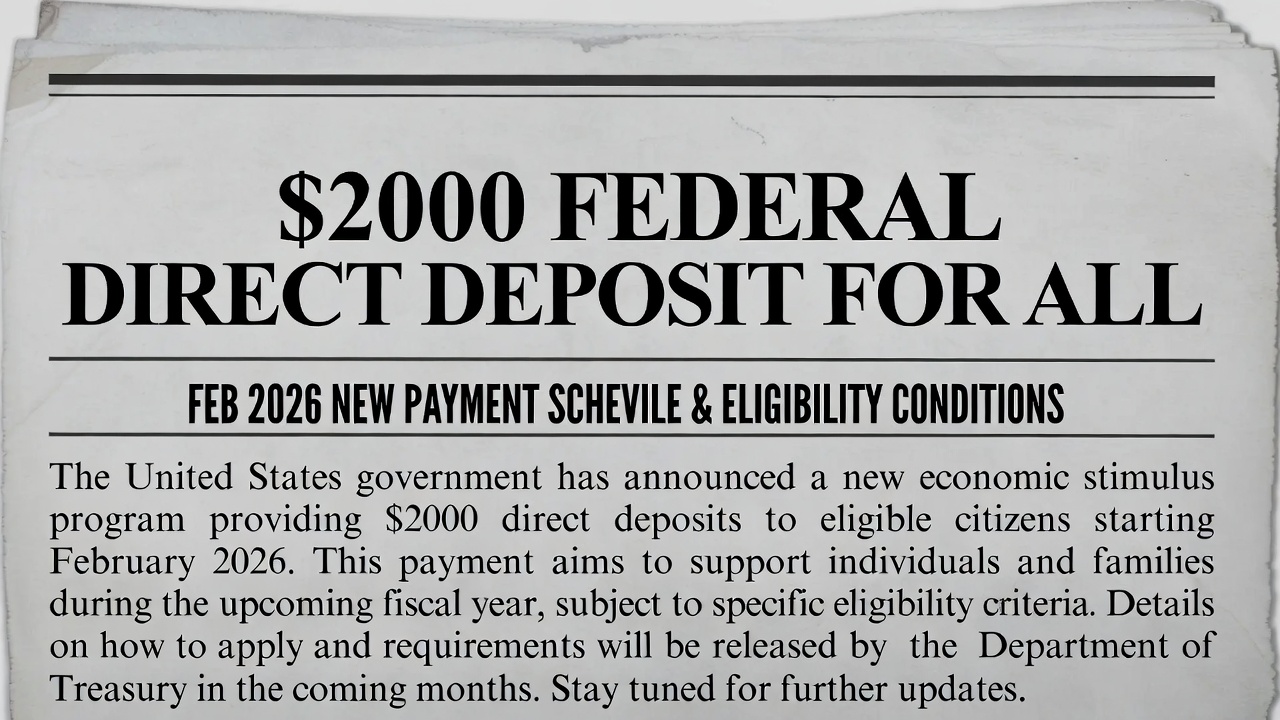
As the United States moves into 2026, discussion about a possible $2,000 federal direct deposit has returned to public attention. Many Americans are seeing posts online that suggest everyone will receive this payment. For families dealing with high rent, grocery prices, and medical costs, the idea of extra money is comforting. At the same time, confusion and doubt are spreading just as quickly.
Unlike earlier stimulus checks during the pandemic, this proposed payment has not been officially approved. What exists today is conversation, not confirmation. February 2026 is often mentioned only because it aligns with budget planning and tax season, not because a payment date has been set.
Why the $2,000 Payment Is Being Discussed Again
The renewed focus on direct cash support comes from ongoing financial pressure. Although inflation has slowed, prices for everyday needs remain high. Many households feel their income does not stretch as far as it once did, especially those living paycheck to paycheck or on fixed incomes.

Lawmakers who support direct payments argue that a one-time deposit is simple and fast. Unlike complex assistance programs, cash relief reaches people quickly and allows them to decide how best to use it. This simplicity is why the idea continues to resurface during times of economic stress.
The Political Side of Direct Payments
Politics also play a role in keeping this topic alive. With elections approaching, leaders are paying close attention to public frustration over living costs. A flat payment is easy to explain and easy for voters to understand.
Supporters believe people feel immediate relief when money arrives in their accounts. Critics, however, worry that such payments are more symbolic than sustainable. This debate has kept the proposal in discussion but has also slowed progress toward any final decision.

Where the Proposal Stands Right Now
As of now, no law has been passed that approves a $2,000 federal direct deposit. Congress has not voted on a final bill, and no agency has announced a confirmed plan. Without legislation, the Treasury and IRS cannot release any payments.
Much of the online information comes from draft ideas or early policy talks. These discussions do not guarantee action. Many proposals change or disappear during negotiations, especially when budgets and spending limits are involved.
Why February 2026 Is Often Mentioned
February is often mentioned because it fits well into the federal calendar. It falls after the new year budget period begins and during peak tax filing season. The IRS already handles large numbers of payments at this time, which makes the month sound practical.

However, convenience does not equal approval. Even if February is discussed as a possible window, delays are common. Budget debates and political disagreements can easily push any decision later in the year.
Who Might Qualify If Approved
If a $2,000 payment were approved, it would likely not go to everyone equally. Despite the phrase “for all,” most serious proposals include eligibility rules. These usually involve income limits and tax filing status.
Citizens and legal residents with valid Social Security numbers would likely qualify first. Payments would probably be based on recent tax returns or federal benefit records. Seniors receiving Social Security and people on SSI or SSDI are often included in draft plans.

How the Payment Would Likely Be Sent
If authorized, payments would probably be delivered the same way past relief payments were sent. Direct deposit would be the fastest option, using bank details already on file with the IRS or Social Security Administration.
People without direct deposit information would likely receive paper checks or prepaid debit cards. These methods tend to take longer and are more likely to face delays. This is why keeping personal and banking information updated is important.
Arguments Supporting the $2,000 Payment
Supporters believe the payment could offer short-term relief. Extra money could help families pay overdue bills, manage rent increases, or cover healthcare expenses. Small businesses might also benefit as spending temporarily increases.
Also Read:
 IRS Approves $2000 Direct Deposit for February 2026: Eligibility, Payment Dates & IRS Instructions
In areas where economic recovery has been slow, this cash boost could make a noticeable difference. For supporters, the payment is not a long-term solution but a way to reduce immediate pressure.
Concerns and Criticism From Opponents
Opponents raise several concerns. Some economists warn that broad payments could add to inflation if supply remains limited. Others argue that targeted aid would be more effective and less costly.
Federal debt is another major concern. Critics question how such a program would be funded and whether it would create long-term financial strain. These concerns have made lawmakers cautious.
Also Read:
 IRS Tax Refund Deposit Schedule 2026: Check Amount & Estimated Dates for Refund Payments in the USA
What Americans Should Do Now
At this stage, the best approach is caution. No one should plan their finances around an unapproved payment. Social media claims should be treated carefully, especially those that promise guaranteed money.
Practical preparation is simple. Filing taxes on time, checking direct deposit details, and keeping addresses updated are smart steps regardless. If a payment is approved, official announcements will be clear and widespread.
The idea of a $2,000 federal direct deposit reflects real financial struggles faced by many Americans. While discussions continue, no payment has been approved as of now. February 2026 remains a possibility, not a promise.

Understanding the difference between policy discussion and confirmed action helps avoid disappointment. Reliable information and official updates are the best tools for navigating uncertain financial news.
Disclaimer
This article is for informational purposes only and does not provide financial, legal, or tax advice. As of February 2026, no $2,000 federal direct deposit has been legally approved. Eligibility rules, payment timelines, and program details may change if legislation is introduced or amended. Readers should rely on official announcements from the U.S. Congress, Department of the Treasury, IRS, and Social Security Administration for accurate and up-to-date information.